Silverhöjdsspåret
The railway section Silverhöjdsspåret, located between Grängesberg in Dalarna County and Ställdalen in Örebro County, is a central part of the Bergslagsbanan. The line is operated daily by an even distribution of passenger and freight trains and constitutes an important link for both regional commuting and industrial transport. To meet future capacity needs and strengthen the operational reliability of the facility, an extensive modernization program is being implemented.
Project details
Location
Sweden
Project Facts
17.5 km of railway prepared for the upcoming track and switch replacement
350 m³ of rock blasted and processed for overhead contact line foundations
Culverts relined and extended, including a new D1200 railway culvert for improved drainage
Preparatory work on Silverhöjdsspåret
The railway section Silverhöjdsspåret, located between Grängesberg in Dalarna County and Ställdalen in Örebro County, is a central part of the Bergslagsbanan. The line is operated daily by an even distribution of passenger and freight trains and constitutes an important link for both regional commuting and industrial transport. To meet future capacity needs and strengthen the operational reliability of the facility, an extensive modernization program is being implemented.
This project phase constitutes a preparatory construction contract for the upcoming track and switch replacement. The phase covers approximately 17.5 km of railway and involves a wide range of ground, civil engineering and railway engineering works.
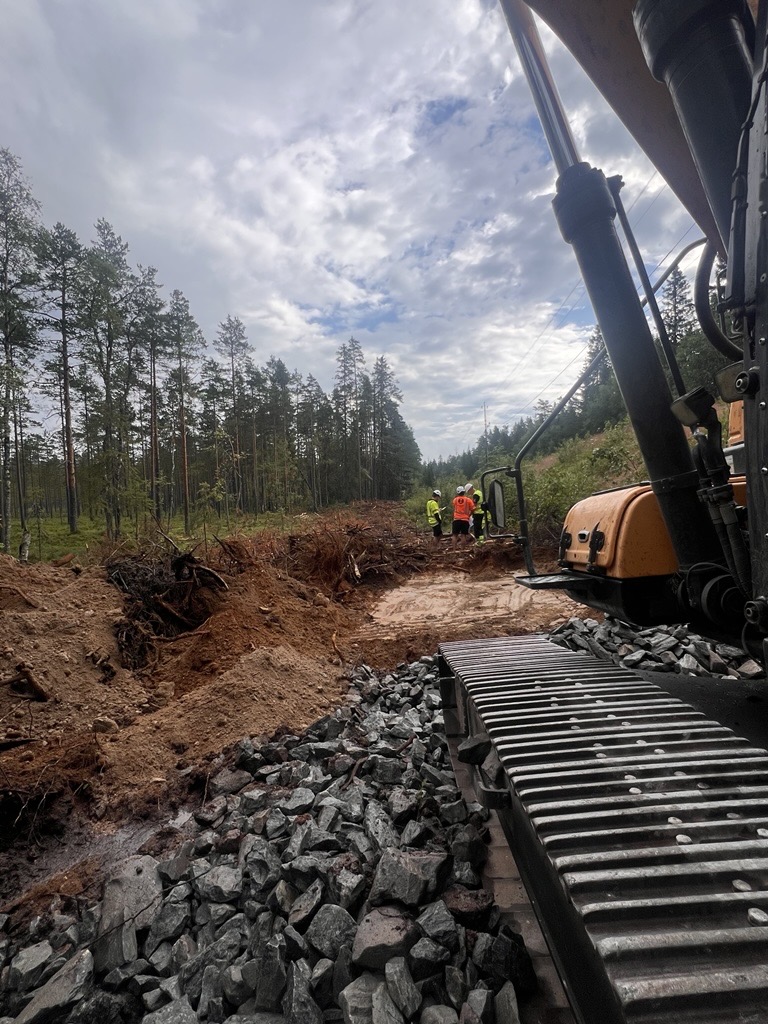
To improve the load-bearing capacity and long-term stability of the facility, extensive drainage and reinforcement measures have been carried out. The work has included excavations in peat, handling large amounts of surface water and subsequent soil stabilization. Counterfort excavations have been carried out at selected locations along the route to reinforce the track bed and create a stable and strong foundation for upcoming track renewal.
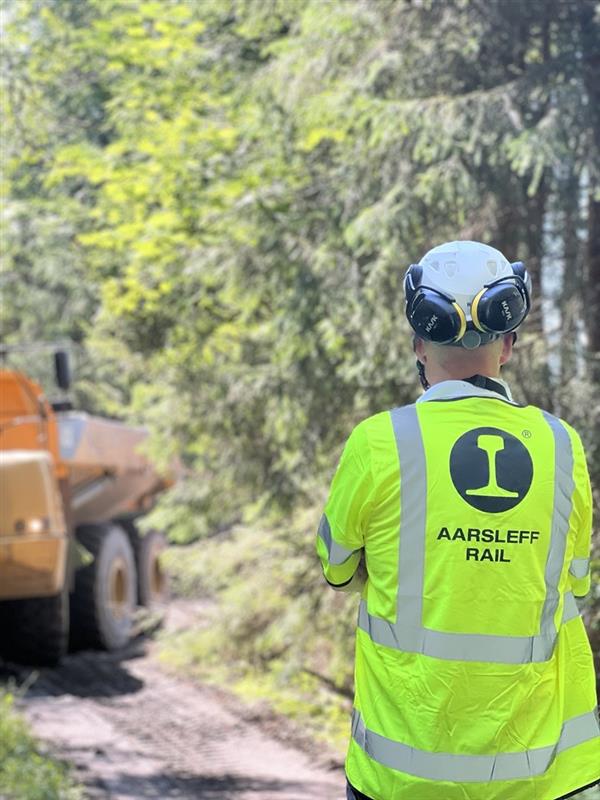
Along the route, clearing, tree felling and stump removal have been carried out to enable the work and improve accessibility within the track area.
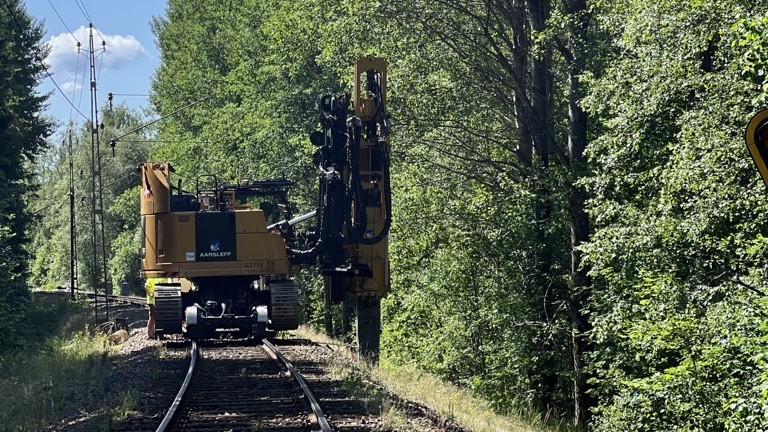
Extensive track, electrical, signalling, and telecommunications work has been carried out within the project, including installation of sleepers and rails, welding and track alignment. Work connected to the overhead contact line installation has been carried out, including demolition and new installation of MOK.
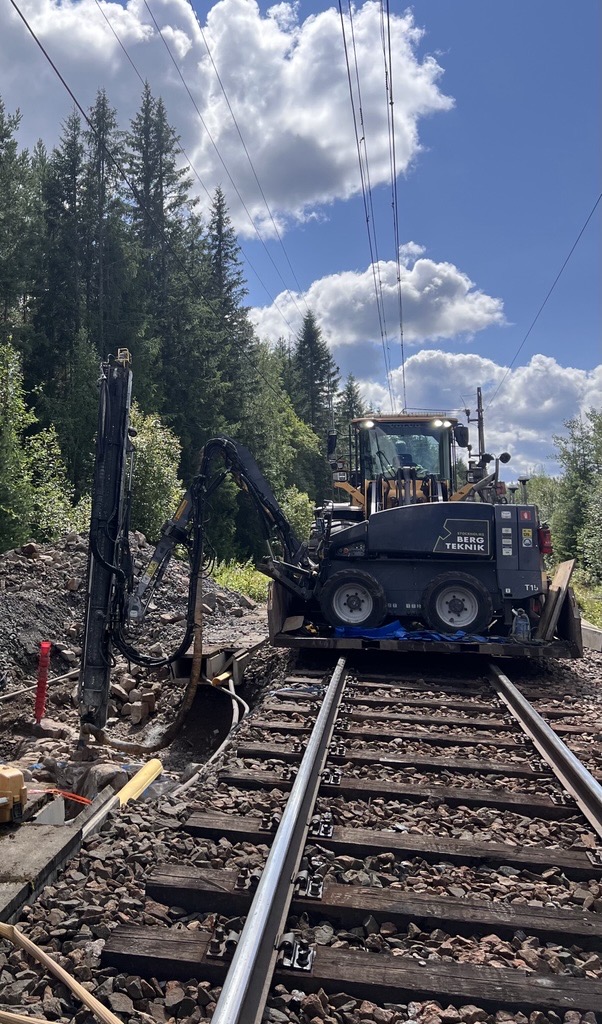
For overhead contact line foundations, ground and rock works has been carried out in varying geotechnical conditions. Rock blasting as well as rock drilling and splitting have been carried out for overhead contact line foundations, comprising approximately 350 m³ of rock.
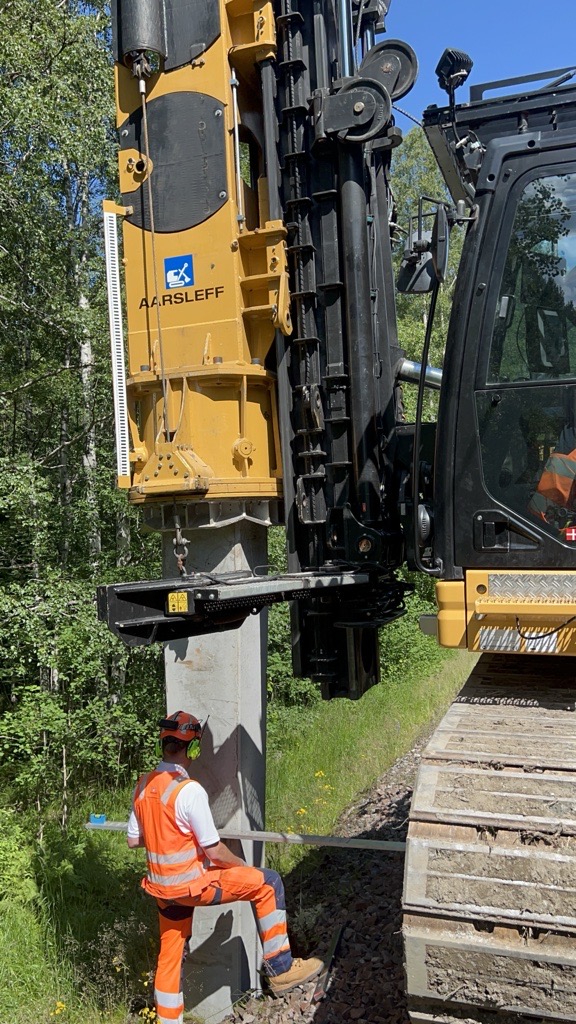
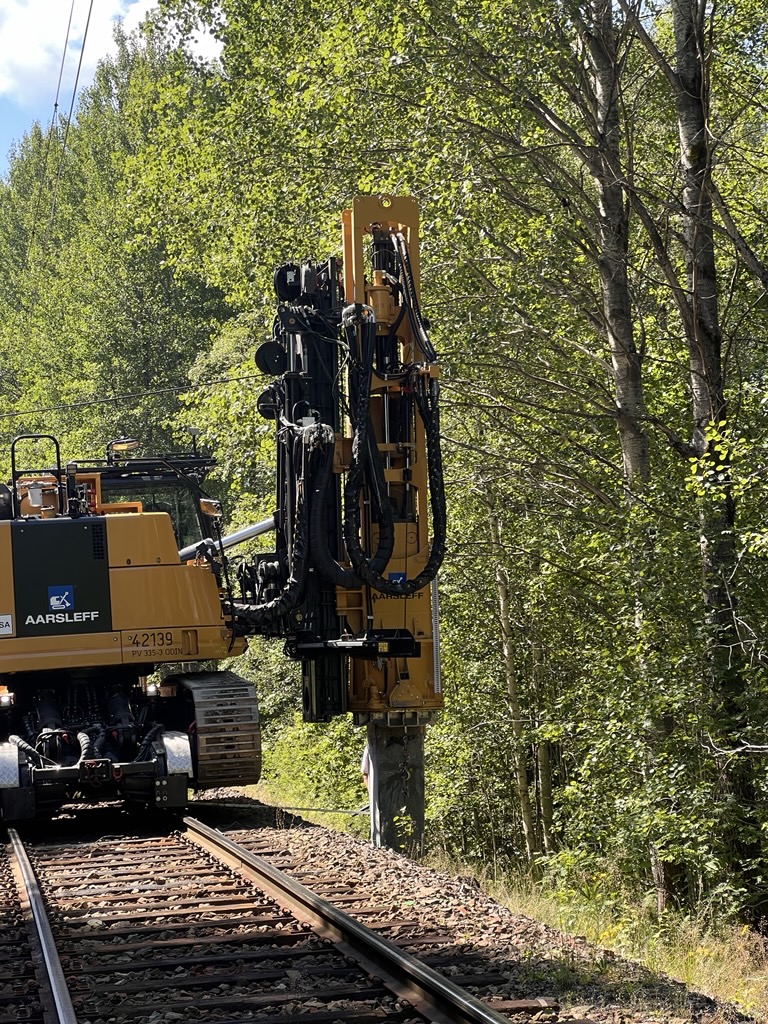
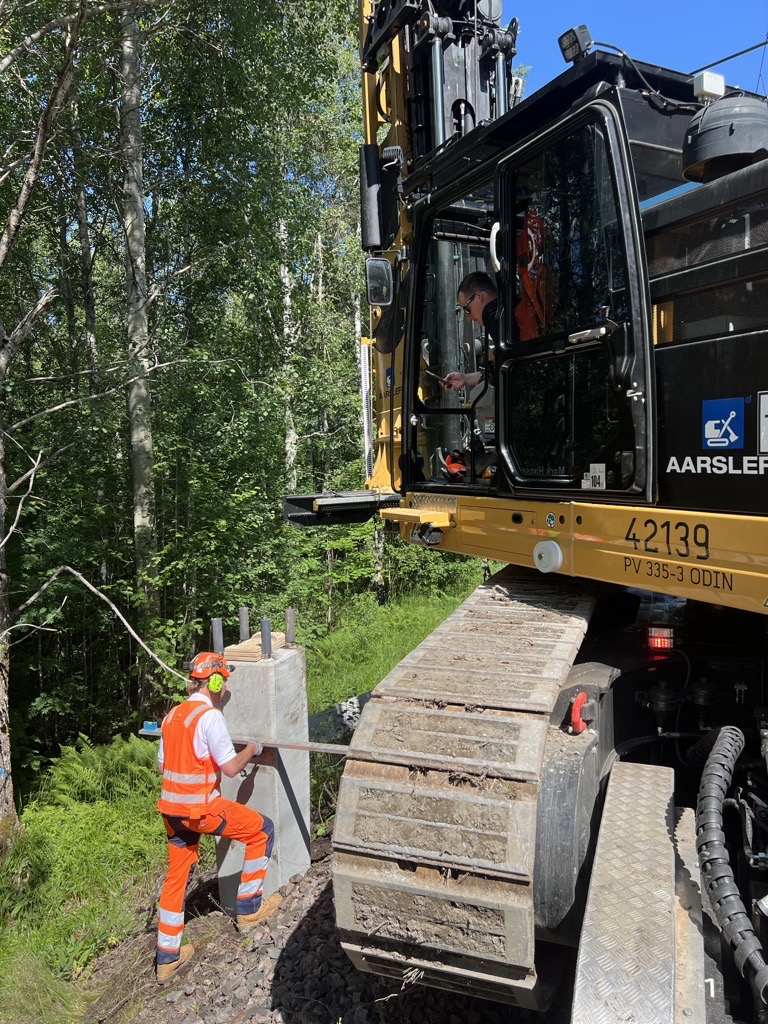
In the project, overhead contact line foundations have been installed using four different methods, adapted to varying ground and rock conditions along the route
- 58, type 5 foundations have been installed through excavation for traditional placement.
- 87 driven foundations executed in areas with favorable soil conditions.
- 15, cast in place foundations with rock bolts, casted and anchored directly into the rock.
- 13, cast in place foundations with rock anchoring, performed after blasting where rock levels required additional measures.
The choice of method has been adapted after the prevailing ground and rock conditions to ensure correct stability and strength in the future overhead line installation.
Along the section, several culvert relinings and culvert extensions have been carried out. A new railway culvert, dimension D1200, has been constructed to ensure sufficient water drainage and reduce the risk for settlements and erosion damage.
Gallery